RYDER, Edgar Norman
Stats:
rank: F/Lstatus: survived
airforce: RAF (no: 39193 )
born: 1914-11-28 Risalpur India
added by: aircraftclocks
add
All Images:
Bio / Text:
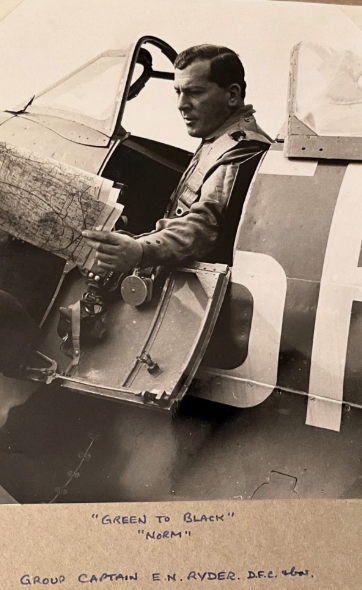
DFC
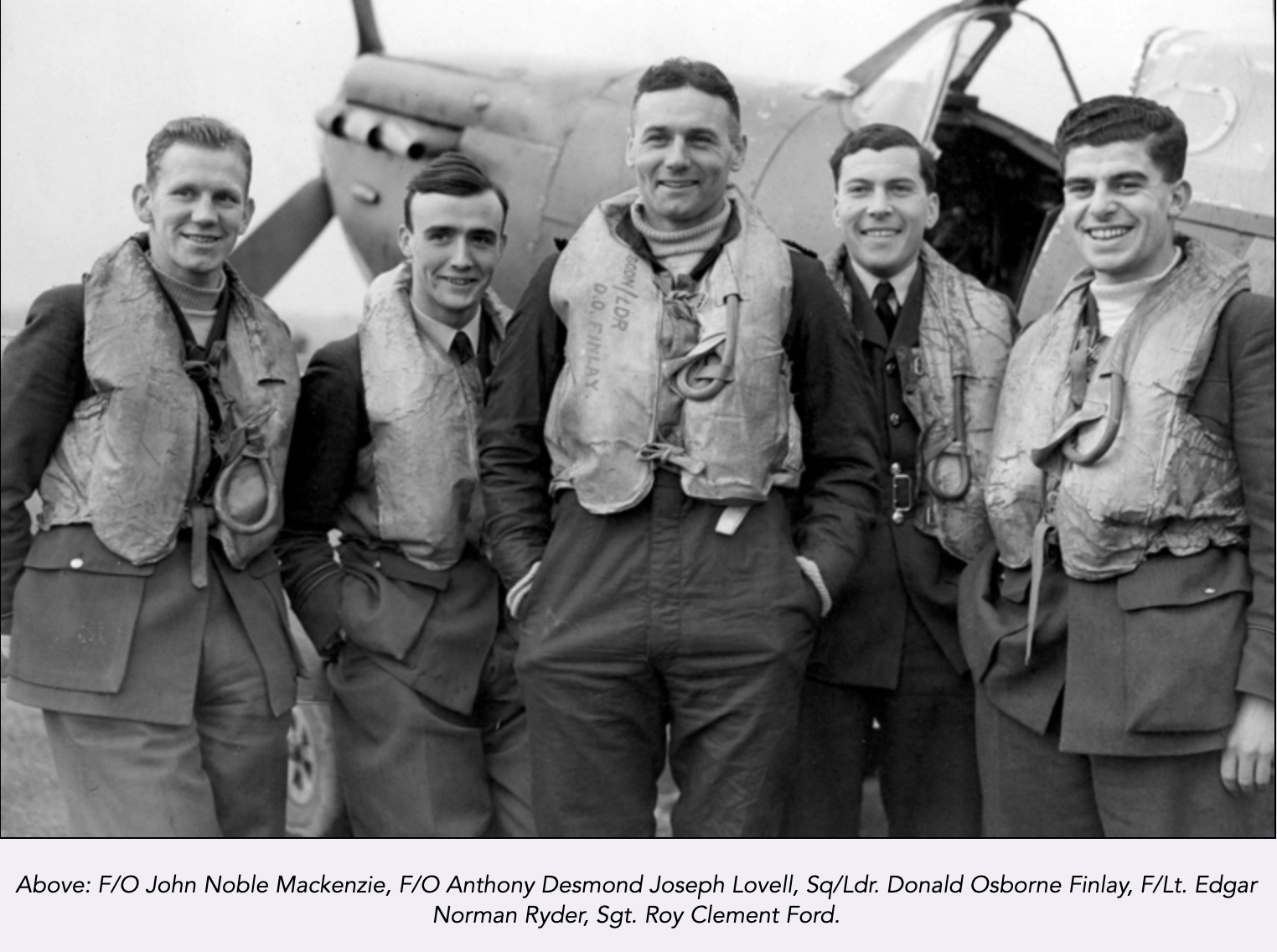
Full name, Edgar Norman Ryder.
Retired from the RAF on 28th October 1960 as a Group Captain.
From the Kenley Revival (KR) site site:
EDGAR NORMAN RYDER was born in Risalpur, India in November 1914. He returned to England at the age of 10. From 1931 to 1934, he served with the Royal Fusiliers and then taught mathematics at Tredennick School, Worcester, before joining the RAF on a short service commission in 1936. After completing his training, he joined 41 squadron at Catterick in June 1937.
On 3rd April, 1940, Ryder shot down an He111, but his Spitfire was damaged in the exchange and he had to ditch in the sea. His aircraft was already quite deeply submerged when he managed to free himself from the cockpit. Luckily, he was picked up by a passing trawler, becoming the first pilot to survive ditching a Spitfire. In August, Ryder received the DFC for this feat.
He spent the first half of 1941 commanding 56 squadron at North Weald and was already an ace, with a Bar to his DFC, when he arrived at Kenley to replace John Kent as Wing Leader, in mid-October. ‘Al’ Deere said he, “couldn’t have wished for a better choice” of leader.
After his forced landing and capture on 31st October, 1941, Ryder was taken PoW and sent to Stalag Luft III. He was moved to Oflag XX1B in Poland and managed to escape by hiding in the back of a truck, but was recaptured two days later.
Ryder received a Mention in Despatches (gazetted 28th December 1945) for distinguished service whilst a PoW.
After the War, he was made a CBE and in 1959 came third in the Bleriot Daily Mail Air Race between London and Paris, flying a Hawker Hunter.
He retired from the RAF in October 1960 retaining the rank of Group Captain and spent his retirement in America.
Edgar Norman Ryder passed away in 1995.
Full name, Edgar Norman Ryder.
Retired from the RAF on 28th October 1960 as a Group Captain.
From the Kenley Revival (KR) site site:
EDGAR NORMAN RYDER was born in Risalpur, India in November 1914. He returned to England at the age of 10. From 1931 to 1934, he served with the Royal Fusiliers and then taught mathematics at Tredennick School, Worcester, before joining the RAF on a short service commission in 1936. After completing his training, he joined 41 squadron at Catterick in June 1937.
On 3rd April, 1940, Ryder shot down an He111, but his Spitfire was damaged in the exchange and he had to ditch in the sea. His aircraft was already quite deeply submerged when he managed to free himself from the cockpit. Luckily, he was picked up by a passing trawler, becoming the first pilot to survive ditching a Spitfire. In August, Ryder received the DFC for this feat.
He spent the first half of 1941 commanding 56 squadron at North Weald and was already an ace, with a Bar to his DFC, when he arrived at Kenley to replace John Kent as Wing Leader, in mid-October. ‘Al’ Deere said he, “couldn’t have wished for a better choice” of leader.
After his forced landing and capture on 31st October, 1941, Ryder was taken PoW and sent to Stalag Luft III. He was moved to Oflag XX1B in Poland and managed to escape by hiding in the back of a truck, but was recaptured two days later.
Ryder received a Mention in Despatches (gazetted 28th December 1945) for distinguished service whilst a PoW.
After the War, he was made a CBE and in 1959 came third in the Bleriot Daily Mail Air Race between London and Paris, flying a Hawker Hunter.
He retired from the RAF in October 1960 retaining the rank of Group Captain and spent his retirement in America.
Edgar Norman Ryder passed away in 1995.
Squadrons:
| Squadrons add | |||
|---|---|---|---|
| Airforce | Sqdrn | Start | Finish |
| none provided | |||
post
Comments / Questions:
post