PAINE, James
Stats:
rank: S/Lstatus: survived
airforce: RAAF (no: 39470 )
born: 1914-09-18 Kadina Australia
added by: Bill Paine
add
All Images:
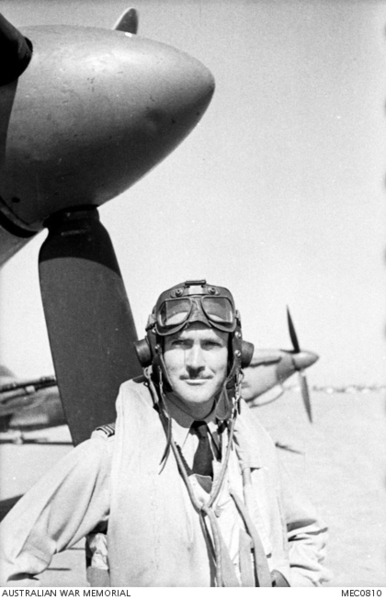
Bio / Text:
Did his initial training at RAAF Point Cook (Victoria, Australia) on various biplanes before being transferred to Bomber Command Headquarters in the UK. He was then assigned to 142 Squadron RAF. He progressed through various squadrons until he was assigned to 45 Squadron RAF where he was a Squadron Leader flying Blenheims.
In his capacity as Squadron Leader, he had picked his two best mates to be his crew on the lead aircraft. On a bombing run, his squadron was attacked by fighters. The Blenheims were shot to pieces. His plane was on fire and diving towards the ground. His navigator/bombardier sitting to his right was dead. He ordered his remaining crew member (the air-gunner in the turret) to bail out immediately. He was fighting to control the plane to give this crew member enough time to get out. After waiting about ten seconds, he pulled the nose of the plane up into a steep climb, unbuckled and started clambering down the fuselage with the intention of bailing out the side door. But as he rose out of his seat and turned, he saw that his air-gunner had not bailed out. He was riddled with bullets. This was the image that burnt itself into dad’s mind as he launched out the door and deployed his canopy. Only then did he realise his left arm was on fire. He managed to put that out before he hit the ground. This happened on 4th February 1941.
His logbook reads:
“Raid on Barce. – (unreadable) railway line. Attacked by CR L2 whilst bombing. Crew killed & A/C caught fire. Pilot made parachute descent.”
He was in hospital for a few months before requesting to be transferred to fighters. From May 1941 to November 1944, he flew Typhoons, Hurricanes, Mustangs and, of course, Spitfires. He became Commanding Officer of 451 Squadron. During this time he was involved in numerous skirmishes before being shot down in the deserts of Northern Africa. He was uninjured but had to walk for three days and three nights to get back to his airbase.
In his capacity as Squadron Leader, he had picked his two best mates to be his crew on the lead aircraft. On a bombing run, his squadron was attacked by fighters. The Blenheims were shot to pieces. His plane was on fire and diving towards the ground. His navigator/bombardier sitting to his right was dead. He ordered his remaining crew member (the air-gunner in the turret) to bail out immediately. He was fighting to control the plane to give this crew member enough time to get out. After waiting about ten seconds, he pulled the nose of the plane up into a steep climb, unbuckled and started clambering down the fuselage with the intention of bailing out the side door. But as he rose out of his seat and turned, he saw that his air-gunner had not bailed out. He was riddled with bullets. This was the image that burnt itself into dad’s mind as he launched out the door and deployed his canopy. Only then did he realise his left arm was on fire. He managed to put that out before he hit the ground. This happened on 4th February 1941.
His logbook reads:
“Raid on Barce. – (unreadable) railway line. Attacked by CR L2 whilst bombing. Crew killed & A/C caught fire. Pilot made parachute descent.”
He was in hospital for a few months before requesting to be transferred to fighters. From May 1941 to November 1944, he flew Typhoons, Hurricanes, Mustangs and, of course, Spitfires. He became Commanding Officer of 451 Squadron. During this time he was involved in numerous skirmishes before being shot down in the deserts of Northern Africa. He was uninjured but had to walk for three days and three nights to get back to his airbase.
Squadrons:
| Squadrons add | |||
|---|---|---|---|
| Airforce | Sqdrn | Start | Finish |
| none provided | |||
Aircraft:
| Aircraftadd | ||
|---|---|---|
| Serial | Note | Date |
| none provided | ||
post
Comments / Questions:
post