OXSPRING, Robert Wardlow
Stats:
rank: G/Cstatus: survived
airforce: RAF (no: 40743 )
born: 1919-05-22 London United Kingdom
added by: Adrian Dwyer
add
All Images:
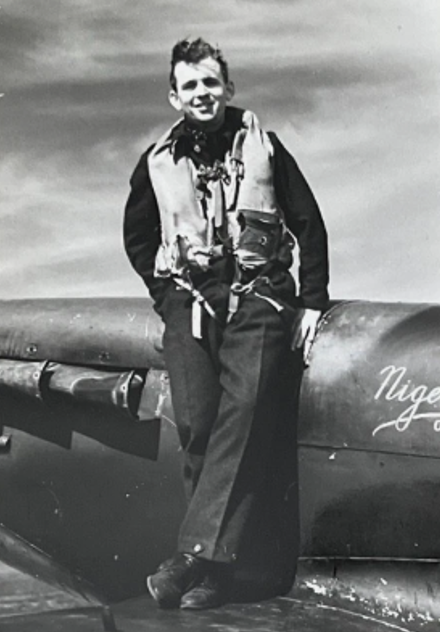
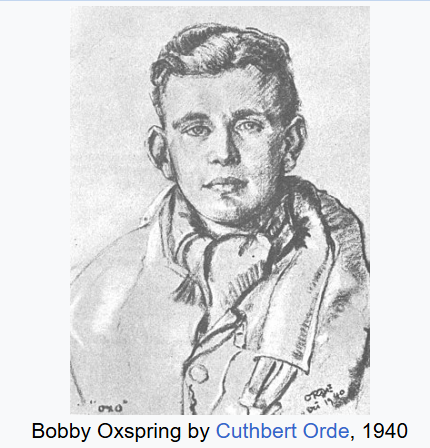
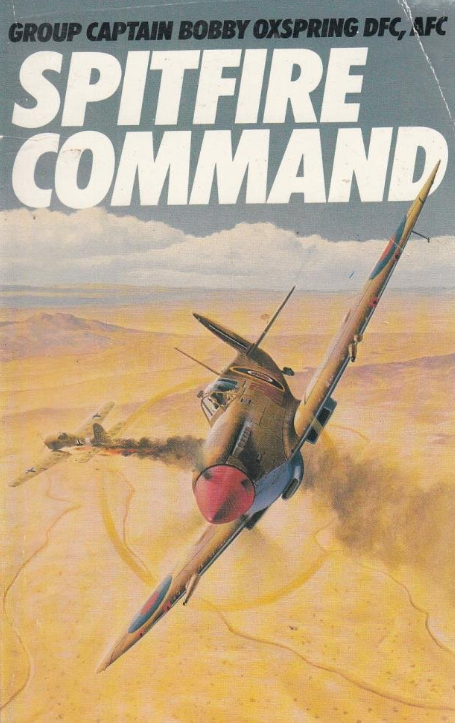
Bio / Text:
From: Remembering Bobby Oxspring (Sapere Books). Flying ace Robert (Bobby) Wardlow Oxspring held the rank of squadron leader when World War Two ended in May 1945. Throughout April 1945, he was confident that the war was soon to conclude. His mood on VE Day as an optimistic family man would have no doubt been a mixture of pride and reflection. He would have been proud of his achievements: he’d been made leader of the 141 Wing at Deanland only the year before, and had been awarded a Distinguished Flying Cross and Two Bars as a flying ace. He would have been reflecting on his numerous wartime adventures, from the Battle of Britain to his time in North Africa, Italy and many other countries. Bobby’s mood on VE Day likely matched the mood of many of ‘The Few’, and I have no doubt he would have felt joy at the war’s conclusion.
For me, the great-grandson of Bobby Oxspring, my great-grandfather has had a huge influence on my life — not only as a proud figure to look up to, exemplifying courage and bravery, but also through his stories. His career after VE Day did not lose momentum. He received a permanent commission as a flight lieutenant on 1st September 1945 and was promoted further to substantive squadron leader on 1st August 1947. One incredible achievement, however, was his award of an Air Force Cross. This was for leading number 54 Squadron of the RAF Vampires to Canada and the US, the very first jet aircraft to cross the Atlantic.
After VE Day, he never stopped being admirable. He undertook further tours, even across Italy, and eventually became Station Commander of RAF Gatow in Berlin. At Churchill’s funeral, he walked at the very front.
I have been to RAF Cranwell to see some of my great-grandfather’s personal scrapbooks and was even fortunate enough to sit in the cockpit of his recovered plane in the Dumfries and Galloway Museum in Scotland. These are only a few of the moments I have taken to reflect on his life.
On VE Day I am almost certain that one thought would have prevailed in his mind: his admiration and respect for the mighty Spitfire, and his pride at having flown it.
Citation:
"One day in September, 1940, Flight Lieutenant Oxspring was engaged on an offensive patrol with his squadron. Whilst acting as rear guard, he sighted and engaged several Messerschmitt 109’s 3,000 feet above. After driving them off, he led his section in an attack against a large formation of enemy bombers and succeeded in destroying a Dornier 17 at short range and also in damaging two Heinkel 111's. He has at all times led his section with skill and determination, and has destroyed six enemy aircraft." Published in The London Gazette dated 8th November 1940
Citation:
"This squadron commander has rendered much valuable service. His skill, whether in attacks on the enemy's ground targets and shipping or in air combat, has been of a high order. He has destroyed at least 7 enemy aircraft." Published in The London Gazette dated 18th September 1942.
Citation:
"During initial operations from forward airfields in North Africa Squadron Leader Oxspring led his formation on many sorties. He destroyed 1 enemy aircraft, bringing his total victories to 8. His outstanding devotion to duty and fine fighting qualities 'have been worthy of' high praise." Published in The London Gazette dated 16th February 1943.
For me, the great-grandson of Bobby Oxspring, my great-grandfather has had a huge influence on my life — not only as a proud figure to look up to, exemplifying courage and bravery, but also through his stories. His career after VE Day did not lose momentum. He received a permanent commission as a flight lieutenant on 1st September 1945 and was promoted further to substantive squadron leader on 1st August 1947. One incredible achievement, however, was his award of an Air Force Cross. This was for leading number 54 Squadron of the RAF Vampires to Canada and the US, the very first jet aircraft to cross the Atlantic.
After VE Day, he never stopped being admirable. He undertook further tours, even across Italy, and eventually became Station Commander of RAF Gatow in Berlin. At Churchill’s funeral, he walked at the very front.
I have been to RAF Cranwell to see some of my great-grandfather’s personal scrapbooks and was even fortunate enough to sit in the cockpit of his recovered plane in the Dumfries and Galloway Museum in Scotland. These are only a few of the moments I have taken to reflect on his life.
On VE Day I am almost certain that one thought would have prevailed in his mind: his admiration and respect for the mighty Spitfire, and his pride at having flown it.
Citation:
"One day in September, 1940, Flight Lieutenant Oxspring was engaged on an offensive patrol with his squadron. Whilst acting as rear guard, he sighted and engaged several Messerschmitt 109’s 3,000 feet above. After driving them off, he led his section in an attack against a large formation of enemy bombers and succeeded in destroying a Dornier 17 at short range and also in damaging two Heinkel 111's. He has at all times led his section with skill and determination, and has destroyed six enemy aircraft." Published in The London Gazette dated 8th November 1940
Citation:
"This squadron commander has rendered much valuable service. His skill, whether in attacks on the enemy's ground targets and shipping or in air combat, has been of a high order. He has destroyed at least 7 enemy aircraft." Published in The London Gazette dated 18th September 1942.
Citation:
"During initial operations from forward airfields in North Africa Squadron Leader Oxspring led his formation on many sorties. He destroyed 1 enemy aircraft, bringing his total victories to 8. His outstanding devotion to duty and fine fighting qualities 'have been worthy of' high praise." Published in The London Gazette dated 16th February 1943.
add
Links (URLs):
Squadrons:
| Squadrons add | |||
|---|---|---|---|
| Airforce | Sqdrn | Start | Finish |
| none provided | |||
Aircraft:
| Aircraftadd | ||
|---|---|---|
| Serial | Note | Date |
| none provided | ||
post
Comments / Questions:
post